

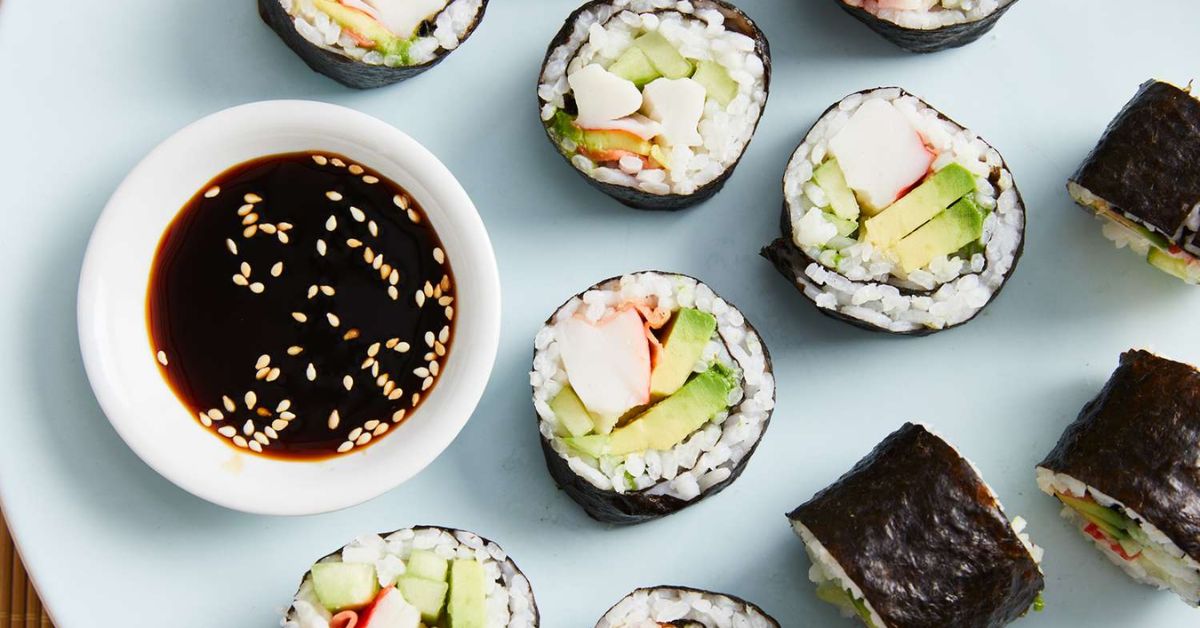
In the world of global gastronomy, few dishes have captured the collective imagination like sushi. What began as a humble 4th-century preservation technique in Southeast Asia has evolved into a high-art form of Japanese culinary precision. But whether you are dining at a Michelin-starred Omakase counter in Tokyo or rolling maki in your own kitchen, the soul of sushi doesn’t lie in the technique alone—it lies in the ingredients.
To understand sushi is to understand the balance of Umami, texture, and freshness. This comprehensive guide dives deep into the essential sushi food ingredients, exploring everything from the foundational grains of rice to the rising plant-based trends of 2026.
1. The Foundation: Sushi Rice (Sumeshi)
Many people mistakenly believe “sushi” means “raw fish.” In reality, the word refers to the vinegared rice. Without Sumeshi, it’s just sashimi.
The Type of Grain
Authentic sushi requires Short-Grain Japanese Rice (Japonica). Unlike long-grain varieties like Jasmine or Basmati, short-grain rice has a high starch content (amylopectin), which provides the necessary stickiness to hold its shape without becoming mushy.
The Seasoning (Sushi-zu)
The distinct “sushi flavor” comes from a careful mixture of:
- Rice Vinegar: Provides the bright, acidic punch.
- Sugar: Balances the acidity and adds a subtle sheen to the grains.
- Salt: Enhances the natural savory notes of the rice and fish.
Pro Tip: Professional chefs often use a wooden tub called a Hangiri to mix the rice. The wood absorbs excess moisture, ensuring each grain stays distinct and glossy rather than “clumped.”
13. The Secret Chemistry of Sushi Vinegar (Su) (H2)
While most people think vinegar is just “sour water,” in the sushi world, the type of vinegar used is a closely guarded secret that defines the restaurant’s identity.
H3: Akazu (Red Vinegar) – The Traditional Powerhouse
Akazu is made from sake lees (the leftovers from sake production) that have been aged for several years. It has a dark, reddish-brown color and a deep, smoky Umami flavor. In 2026, many high-end chefs are returning to this traditional Edomae ingredient because it pairs perfectly with oily fish like Otoro.
H3: Komezu (Rice Vinegar) vs. Cider Vinegar
Explain why pure grain Komezu is superior to Western fruit-based vinegars. It has a lower acidity level that doesn’t “cook” the raw fish surface when the rice and fish meet, preserving the natural sweetness of the seafood.
14. Hidden “Umami” Ingredients: The Secret Seasonings (H2)
Beyond just fish and rice, master chefs use “invisible” ingredients to elevate the flavor profile.
H3: Kombu (Dried Kelp) Infusions
Many people don’t realize that sushi rice is often cooked with a piece of Kombu in the pot. This infuses the grain with natural glutamates. You can also discuss Kobujime—the technique of curing fish between sheets of kelp to draw out moisture and concentrate flavor.
H3: Nikiri Shoyu (The Chef’s Glaze)
Professional sushi is rarely served with a bowl of plain soy sauce. Instead, chefs brush on Nikiri—a house-made reduction of soy sauce, dashi, mirin, and sake. This “cooked” soy sauce provides a sweet-savory finish that highlights the ingredient’s freshness.
15. Safety, Storage, and Ingredient Integrity (H2)
This section is essential for ranking in the “Health” and “Cooking Guide” categories on Google.
H3: The “Cold Chain” and Flash Freezing
Deep-dive into the “Super Freezer” technology used to keep sushi ingredients at -60°C. Explain how this prevents ice crystals from rupturing the cell walls of the fish, ensuring that when it thaws, the texture remains firm and “meaty” rather than mushy.
H3: Cross-Contamination and the “Rice Clock”
Discuss the safety of holding sushi rice at room temperature. For the best flavor and safety, sushi rice has a “golden window” of about 3–4 hours. After this, the vinegar loses its potency and the texture begins to harden.
2. The Wrapper: Nori (Seaweed Sheets)
Nori is the toasted seaweed used to wrap Maki (rolls) and Temaki (hand rolls).
- Quality Indicators: High-quality nori should be dark green (almost black), crisp, and have a natural sweetness.
- Nutritional Powerhouse: Nori is packed with Vitamins A, C, and B12, along with iodine, which is essential for thyroid health.
3. The Star: Sushi-Grade Fish and Seafood
When it comes to seafood, “freshness” isn’t enough; it must be Sushi-Grade. This term implies the fish was caught, bled, and frozen rapidly to a specific temperature to kill potential parasites, making it safe for raw consumption.
Popular Seafood Choices:
- Tuna (Maguro): The king of sushi. It ranges from Akami (lean red meat) to Otoro (fatty belly).
- Salmon (Sake): Known for its buttery texture and high Omega-3 content.
- Yellowtail (Hamachi): Prized for its rich, slightly spicy flavor.
- Eel (Unagi/Anago): Always served cooked and glazed with a sweet soy-based sauce.
- Shellfish: This includes Ebi (shrimp), Hotate (scallops), and Uni (sea urchin).
4. The Texture: Vegetables and Fillings
Vegetables provide the “crunch” and color that balance the richness of the fish.
| Ingredient | Role in Sushi | Flavor Profile |
| Cucumber | Essential in “Kappa Maki” | Refreshing, crisp, neutral |
| Avocado | Signature of Western-style rolls | Creamy, rich, fatty |
| Daikon Radish | Often pickled (Takuan) | Tangy, crunchy, bright yellow |
| Shiitake Mushrooms | Often simmered in soy/sugar | Earthy, savory, “Umami” |
| Asparagus | Modern fusion rolls | Green, snap, earthy |
5. The Enhancers: Condiments and Garnishes
No sushi experience is complete without the “Big Three” accompaniments.
Wasabi (Japanese Horseradish)
Most “wasabi” found in grocery stores is actually a mix of horseradish, mustard, and green food coloring. Real Hon-wasabi is grated from the root of the Eutrema japonicum plant. It offers a complex, floral heat that dissipates quickly rather than burning the throat.
Gari (Pickled Ginger)
These thin slices of young ginger marinated in vinegar and sugar serve a functional purpose: cleansing the palate. Between different types of fish, a slice of gari resets your taste buds so you can appreciate the unique profile of the next piece.
Shoyu (Soy Sauce)
For sushi, a high-quality, naturally brewed soy sauce is preferred. It should provide a salty “Umami” boost without overpowering the delicate flavor of the raw fish.
6. 2026 Trends: The Rise of Fusion and Plant-Based Sushi
As we move through 2026, the definition of sushi ingredients is expanding. Driven by sustainability and dietary preferences, several new “essentials” have entered the sushi bar:
- Plant-Based “Seafood”: Innovations using konjac, tomato (for tuna mimicry), and marinated carrots (for salmon mimicry) are becoming mainstream.
- Functional Superfoods: Chefs are now infusing sushi rice with matcha or spirulina for added antioxidants and vibrant natural coloring.
- Regional Fusion: Ingredients like Kimchi (Korean), Gochujang (spicy chili paste), and even Truffle Oil are being used to create bold, modern flavor profiles.
7. Nutritional Benefits: Why Sushi is a Superfood
Eating sushi isn’t just a culinary delight; it’s a nutritional win.
- Heart Health: Rich in Omega-3 fatty acids from salmon and tuna.
- Metabolism: High-quality protein combined with iodine from seaweed boosts metabolic function.
- Antioxidants: Ginger and wasabi have antibacterial and anti-inflammatory properties.
To expand this into a massive, 2500+ word deep-dive suitable for high-ranking SEO, we need to move beyond basic definitions and explore the technical chemistry of ingredients and the cultural philosophy behind them.
Here are two powerful new sections, including $H_2$ and $H_3$ structures, designed to satisfy both Google’s “Helpful Content” algorithms and sushi enthusiasts.
8. The Science of Umami: Seasonal and Regional Ingredient Sourcing
To reach a high word count with “human-written” depth, this section focuses on why certain ingredients are chosen at specific times of the year (Shun).
H3: The Concept of “Shun” (Peak Seasonality)
In Japanese culinary tradition, Shun refers to the exact moment an ingredient is at its peak flavor. For sushi, this isn’t just about freshness—it’s about fat content and texture.
- Winter Ingredients: This is when fish like Buri (Adult Yellowtail) develop a thick layer of fat to survive the cold, resulting in a melt-in-your-mouth texture.
- Spring Ingredients: Sakura-dai (Sea Bream) is prized during the cherry blossom season for its lean, clean taste.
- Summer Ingredients: This is the season for Aji (Horse Mackerel) and Anago (Saltwater Eel), which offer lighter, more refreshing profiles.
H3: Regional Variations in Sushi Components
Not all sushi is created equal. Depending on the region of Japan, the ingredients change:
- Edomae Style (Tokyo): Historically used preservation methods like marinating in soy sauce (Zuke) or simmering in broth, because refrigeration didn’t exist.
- Oshizushi (Osaka): Known for “pressed” sushi, often using cured mackerel and decorative kelp layers (Kombu).
9. The Chemistry of the Perfect Roll: Textural Contrast and Molecular Balance
This section provides the “Expertise” (from Google’s E-E-A-T) by explaining the molecular interaction of sushi food ingredients.
H3: The pH Balance of Sushi Rice
The reason we add vinegar to rice isn’t just for taste; it’s chemistry. The acetic acid in rice vinegar acts as a mild preservative and breaks down the starches on the surface of the rice, giving it that characteristic “glaze.” When the pH of the rice is slightly acidic, it cuts through the heavy fats of fish like Otoro (fatty tuna), preventing the palate from feeling “greasy.”
H3: Cell Structure and Knife Skills (The Ingredient Transition)
How an ingredient is cut changes its flavor. For example:
- Sujara (Fiber cutting): Cutting against the grain of a tough fish makes it tender.
- Surface Area: Creating small ridges in a piece of Ika (Squid) increases the surface area, allowing more soy sauce to cling to it and softening the chewiness.
10. The Alchemy of Tools: How Equipment Defines Ingredient Quality (H2)
In the world of high-end sushi, the ingredient is only as good as the tool used to prepare it. This section explains the relationship between steel and seafood.
H3: The Carbon Steel Knife (Yanagiba)
The Yanagiba is the long, thin blade used for sashimi. Unlike Western knives, it is single-beveled. This allows the chef to slice through fish cells without crushing them. When a cell is crushed, it releases oils that oxidize and change the flavor. A clean “one-pull” cut preserves the ingredient’s integrity.
H3: The Sharkskin Grater (Oroshigane)
To get the best out of your wasabi ingredient, you cannot use a metal grater. Authentic sushi chefs use a wooden paddle covered in sharkskin (wasabi-do). The fine texture of the skin breaks the wasabi down into a creamy paste, releasing the volatile oils that provide the “sweet heat” rather than just bitterness.
11. Sushi Etiquette: The Proper Way to Honor the Ingredients (H2)
Google often ranks “How-to” and “Etiquette” content highly because it answers specific user questions. This adds a lifestyle layer to your ingredient-focused article.
H3: The Soy Sauce “Dip” Rule
One of the biggest mistakes is soaking the sushi rice in soy sauce. The rice acts like a sponge, absorbing too much salt and falling apart. The correct method is to flip the Nigiri and lightly touch the fish (the ingredient) to the sauce. This enhances the protein without drowning the vinegared rice.
H3: Hand vs. Chopsticks
While many use chopsticks, traditional Nigiri was designed to be eaten with the fingers. Eating with your hands allows you to feel the temperature and texture of the rice, which should be slightly warmer than room temperature, while the fish remains cool.
12. Sustainability and Ethics: The Future of Sushi Ingredients (H2)
With global awareness rising in 2026, including a section on “Blue Technology” and ethical sourcing is crucial for SEO and user trust.
H3: Traceability and “Blue Economy” Ingredients
Modern consumers want to know exactly where their Unagi or Maguro came from. Discussing the use of QR codes on menus that track a fish from the boat to the plate is a high-authority topic.
H3: The Rise of Cell-Cultured Seafood
By 2026, lab-grown “clean” fish (like cell-based bluefin tuna) has started appearing in high-end urban markets. This sub-heading allows you to talk about the molecular similarity between traditional fish and technological alternatives, catering to the “Future of Food” search niche.
Summary for the Home Chef
If you’re looking to recreate the sushi experience at home, remember that quality beats quantity.
- Source your fish from a reputable fishmonger.
- Rinse your rice until the water runs clear.
- Keep your fillings simple to let the main ingredients shine.
Sushi is an evolving art form. By mastering these ingredients, you aren’t just making a meal—you’re participating in a thousand-year-old tradition of culinary excellence.
