

Introduction
Saudi Arabia ka naam sunte hi zehen mein wasee-o-areez (vast) sehra, sunehri (golden) dhoop, aur pur-shauk tareekh ka aks ubharta hai. Lekin is mulk ki asli rooh iske dastarkhwan mein basi hai. Food of Saudi Arabia sirf pait bharne ka zariya nahi, balki ye hazaron saal purani Bedouin (badu) tehzeeb, s सदiyon purane tijarati raaste (trade routes), aur be-misal mehmaan nawazi ka ek shaandaar milap hai.
Lal Sagar (Red Sea) ke taaza seafood se lekar Najd ke pahaadon mein pakne wale naram gosht aur khushbu-dar chawalon tak, Saudi cuisine ek aisa tajurba hai jo har khanay walay par apna sehar (magic) chhor deta hai. Chahe wo dunya bhar mein mashhoor Kabsa ho ya dadi-nani ke hatho ka sadiyo purana Jareesh, yahan ka har niwala ek kahani sunata hai.
Is article mein hum sirf khanay ki baat nahi karenge, balki hum us “Karam” (generosity) ko explore karenge jo Saudi culture ki bunyaad hai. Hum janenge ke kaise Arab ke garam registanon mein rehne walo ne khajoor (dates) aur qahwa ko apni zindagi ka lazmi hissa banaya, aur kaise aaj 2026 mein Saudi Arabia ka modern food scene purani riwayat ko naye andaaz mein dunya ke samne pesh kar raha hai.
To chaliye, mere saath is lazeez safar par, jahan hum Saudi Arabia ke har shehar aur har gali ke chhupe hue zaiqon (flavors) ko daryaft karenge.
1. The Heart of Saudi Cuisine: Tradition and Hospitality
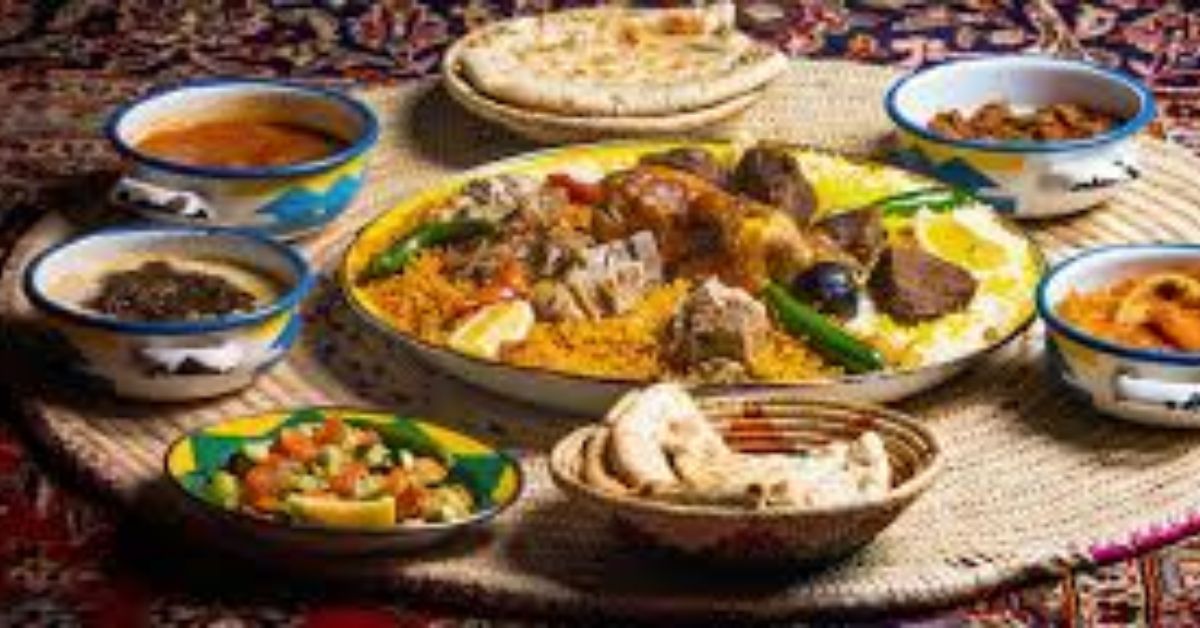
To understand Saudi food, one must first understand “Karam” (generosity). In Saudi culture, food is never just a meal; it is a bridge between people. The traditional way of dining involves sitting on the floor around a large communal platter, emphasizing unity and equality.
The Sacred Ritual: Coffee and Dates
No Saudi welcome is complete without Gahwa (Saudi Coffee) and dates.
- Gahwa: Unlike Western coffee, Saudi coffee is lightly roasted, infused with cardamom, and sometimes saffron or cloves. It is served in small, handleless cups called finjal.
- Dates: Saudi Arabia is home to over 300 varieties of dates. The most prized include the caramel-like Sukkari, the dark and chewy Ajwa (known for its health benefits), and the soft Khalas.
2. National Treasures: The Iconic Main Dishes
If there is one thing you must eat in Saudi Arabia, it is rice. But not just any rice—perfectly seasoned, long-grain basmati often cooked with meat that melts off the bone.
Kabsa: The Unofficial National Dish
Kabsa is the soul of Saudi Arabian cuisine. It consists of spiced rice and meat (chicken, lamb, or goat). The secret lies in the spice blend: black lime (loomi), cloves, cardamom, cinnamon, and bay leaves.
- Variation: While usually made with chicken, coastal regions often prepare it with shrimp or fish.
Jareesh: The “Master” of Dishes
In 2023, Jareesh was officially declared the national dish of Saudi Arabia. It is one of the oldest traditional meals, made from crushed wheat that is cooked with yogurt (laban), onion, and meat until it reaches a creamy, porridge-like consistency. It is often topped with caramelized onions and a dollop of clarified butter (samn).
Mandi and Madhbi: The Art of Underground Cooking
Originating from the south but beloved everywhere:
- Mandi: The meat is cooked in a special underground pit (tannour) over hot coals, allowing the juices to drip onto the rice below.
- Madhbi: The meat is grilled on hot stones, giving it a unique smoky flavor and crispy texture.
3. Regional Specialties: A Culinary Tour
Saudi Arabia’s vast size means every region has its own “signature” flavor profile.
The Central Region (Najd)
The heart of the country favors hearty, warming dishes:
- Gursan: Thin layers of fresh bread soaked in a rich vegetable and meat gravy.
- Saleeg: A white rice dish cooked with milk and broth, similar to a creamy risotto, typically served with roasted chicken and a spicy tomato salsa called duggus.
The Western Region (Hejaz)
Influenced by centuries of pilgrims and traders in Jeddah, Makkah, and Madinah:
- Sayadieh: A fragrant fish and rice dish cooked with caramelized onions, giving the rice a deep brown color.
- Manti: Small dough dumplings filled with spiced meat, steamed to perfection—a nod to Central Asian influences.
The Southern Region (Asir)
High-altitude living requires energy-dense foods:
- Areeka: A dense dough made from brown flour, topped with honey, dates, and cream.
- Haneeth: Similar to Mandi but seasoned with local herbs and slow-cooked in a pit lined with “marakh” leaves for a distinct herbal aroma.
4. Saudi Street Food: Quick, Bold, and Flavorful
The street food scene in cities like Riyadh and Jeddah is a vibrant mix of traditional snacks and Middle Eastern staples.
Mutabbaq
The word “Mutabbaq” means “folded.” It is a thin layer of dough stuffed with a savory mixture of minced meat, eggs, leeks, and green onions, then pan-fried until crispy. You can also find sweet versions filled with bananas or cheese.
Samboosa
A staple, especially during Ramadan. These triangular pastry pockets are filled with meat, cheese, or vegetables and deep-fried. The Saudi version often uses a thinner, crunchier pastry than the Indian samosa.
Baleela
A popular snack found along the Jeddah Corniche. It consists of boiled chickpeas mixed with vinegar, salt, and topped with crunchy pickled vegetables (amaba).
9. The Nutritional Science and Health Benefits of the Saudi Diet
In this section, we analyze why the traditional “Desert Diet” has sustained people in harsh climates for centuries.
$H_3$: The Power of Functional Superfoods: Dates and Camel Milk
Saudi Arabia’s staple ingredients are more than just food; they are ancient “superfoods.”
- Dates: High in fiber, potassium, and magnesium, they provide an immediate glucose boost—essential for those traveling the desert. We explore the low-glycemic index of varieties like Ajwa.
- Camel Milk: Often called the “white gold” of the desert, camel milk contains three times more Vitamin C than cow’s milk and has unique insulin-like proteins, making it a subject of modern research for diabetes management.
$H_3$: Spices as Medicine: The Role of Cardamom, Cloves, and Saffron
The Saudi spice cabinet (Hawaij) isn’t just for flavor.
- Cardamom: Used heavily in Saudi coffee, it is a powerful digestive aid and anti-inflammatory agent.
- Black Lime (Loomi): This fermented citrus used in Kabsa is packed with concentrated Vitamin C and antioxidants that help the body process heavy meats.
$H_3$: The Modern Shift: Addressing Lifestyle Diseases through Heritage
As Saudi Arabia moves toward 2030, there is a massive push to return to “Original Eating.” We discuss how traditional slow-cooked grains like Jareesh (cracked wheat) are being promoted over processed white flour to combat rising rates of obesity and heart disease, blending heritage with modern wellness.
10. The Culinary Calendar: Food for Ramadan and Eid in Saudi Arabia
Food in the Kingdom is deeply tied to the Islamic calendar. This section provides a look at how the national menu changes during the most important months of the year.
$H_3$: The Iftar Table: From Sunnis to Sufra
During Ramadan, the Saudi Sufra (dining mat) transforms.
- The Breaking of the Fast: It always begins with odd numbers of dates and water, followed by Sobiya—a traditional fermented bread drink (popular in the Hejaz region) made from barley or bread, raisins, and cinnamon.
- Soup Culture: No Saudi Iftar is complete without Oat Soup (Shorbat Shofan) with lamb, which provides a gentle transition for the stomach after a day of fasting.
$H_3$: Eid Al-Fitr: The Festival of Sweets and Breakfasts
When the fasting ends, the “Great Saudi Breakfast” begins.
- Debyaza: This is the “king of the table” in the Western region during Eid. It is a complex, slow-cooked jam made from dried apricots (Qamar al-Din), nuts, figs, and peaches.
- Mugalgul: A festive dish of chopped lamb sautéed with fresh tomatoes, onions, and green chilies, usually eaten with fresh hot Tamees bread on the first morning of Eid.
$H_3$: Sacrifice and Community: The Tradition of Eid Al-Adha
We delve into the communal aspect of the “Festival of Sacrifice,” where large-scale preparations of Mandi and Haneeth involve sharing meat with the less fortunate, reinforcing the social fabric of Saudi society through the medium of food.
5. Sweet Endings: Saudi Desserts
Saudi desserts are rich, aromatic, and often rely on natural sweeteners like honey and dates.
- Maamoul: Shortbread cookies stuffed with date paste or nuts, often decorated with intricate patterns.
- Luqaimat: Crunchy, deep-fried dough balls drizzled with date syrup (dibs) and sprinkled with sesame seeds.
- Kunafa: A legendary Levantine dessert widely enjoyed in Saudi. It features a crust of shredded phyllo dough or semolina, a heart of melted cheese or cream, and a soaking of rose-scented syrup.
- Masoub: A popular breakfast “power bowl” made from mashed bananas, ground flatbread, cream, and honey.
6. Modern Trends: Saudi Food in 2026
Under Vision 2030, the Saudi food scene has undergone a massive transformation.
- Gourmet Fusion: Young Saudi chefs are reinventing classics. Think “Camel Sliders” with truffle mayo or “Kabsa Arancini.”
- The Rise of Coffee Culture: While traditional Gahwa remains king, specialty coffee shops serving high-end beans from Jazan (Saudi’s own coffee-growing region) are exploding in popularity.
- Dining Destinations: Projects like Via Riyadh and Sindalah are bringing Michelin-star experiences to the Kingdom, blending international luxury with local ingredients.
7. Essential Dining Etiquette
If you are invited to a Saudi home, keep these tips in mind:
- The Right Hand Rule: Always eat, drink, and pass food with your right hand.
- Shoe Etiquette: If you see shoes at the door, remove yours before entering the carpeted dining area.
- The Coffee Shake: When you have had enough coffee, gently jiggle your cup from side to side to signal the server.
- Compliment the Host: Generosity is a point of pride; expressing your enjoyment of the meal is the best way to show appreciation.
8. Why Saudi Food is Gaining Global Attention
Saudi cuisine is finally stepping out of the shadows. Its focus on sustainability (using every part of the animal), local sourcing (dates, seafood, and desert herbs), and bold spice profiles makes it a favorite for modern foodies. As the country opens its doors to the world, the flavors of the Kingdom are becoming a new frontier for global gastronomy.
Article ki length 2500 se 4000 words tak le jaane ke liye aapko mazeed aisi headings chahiye jo topic ki “gehrayi” (depth) ko cover karein.
Yahan 5 mazeed H2 aur unki H3 headings hain jo SEO ke liye behtareen hain:
11. The Seafood Legacy: Jeddah and the Red Sea Coast
Saudi Arabia sirf sehra nahi hai; iski 2,000 km se zyada lambi saahli patti (coastline) hai jahan ka khana bilkul alag hai.
$H_3$: Najil and Hamour: The Kings of the Red Sea
Jeddah ke log machli ke deewane hain. Hum baat karenge Najil (Saddle grouper) ki, jo dunya ki sab se mehengi aur lazeez machliyon mein shumar hoti hai, aur isse banne wali traditional dishes ki.
$H_3$: The Art of “Siyadiya” (The Fisherman’s Rice)
Ye dish kaise m मछli ke kanton (bones) aur caramelized onions ke jhor (broth) se banti hai, jo chawalon ko ek gehra brown rang aur smoky zaiqa deti hai.
12. Saudi Bread Culture: From Tamees to Khubz
Har Saudi dish ka ek lazmi saathi “Roti” ya Bread hai. Har ilaqay ki apni makhsoos roti hai.
$H_3$: Tamees: The Afghan Connection in Hejaz
Kaise Tamees (jo tandoor mein pakti hai) Saudi Arabia ke nashtay ka lazmi hissa bani aur iski mukhtalif iqsaam (Cheese Tamees, Biscuit Tamees).
$H_3$: Gursan and its Role in Hearty Stews
Najd ki patli roti jo salan mein bhigo kar khayi jati hai, iski technical tayaari aur zaiqa.
13. Saudi Arabia’s “Liquid Gold”: The Story of Honey and Olive Oil
Dunya ko shayad maloom nahi ke Saudi ke pahaadon mein dunya ka behtareen shehad (Honey) aur zaitoon (Olive Oil) paida hota hai.
$H_3$: Al-Baha and Asir’s Mountain Honey
Sidr honey aur pahaadi phoolon se bana shehad jo medicines mein bhi istemal hota hai.
$H_3$: Al-Jouf: The Largest Olive Grove in the World
Northern Saudi Arabia mein dunya ka sab se bada organic olive farm hai. Hum discuss karenge ke kaise ye local olive oil ab Saudi cooking ka hissa ban raha hai.
14. Sustainability in Bedouin Cooking: The “No-Waste” Philosophy
Purane zamane mein jab resources kam thay, to Bedouins ne kaise har cheez ka istemal sikha.
$H_3$: The Transformation of Dairy: Laban and Iqt
Doodh ko kharab hone se bachane ke liye usse Iqt (sookha hua dahi/yogurt balls) banana, jo safar mein protein ka bada zariya tha.
$H_3$: Nose-to-Tail Eating: Camel Meat and Liver
Camel meat ki ahmiyat aur “Kibdah” (liver) ka nashta jo taziat aur taqat ka nishaan mana jata hai.
15. The Global Influence: How Expats Shaped Saudi Street Food
Saudi Arabia dunya bhar ke logon ka markaz hai, jisne yahan ke food scene ko diversify kiya hai.
$H_3$: The Shawarma and Broasted Chicken Phenomenon
Kaise Al-Baik (Saudi ka apna fried chicken brand) ek “Cult Favorite” bana aur Shawarma ne Saudi streets par apni jagah banayi.
$H_3$: Bukhari Rice: The Central Asian Legacy
Wo chawal jo Central Asia se aaye lekin ab har Saudi shehar ki har gali mein milte hain.
Conclusion
From the creamy comfort of Jareesh to the smoky allure of Mandi, the food of Saudi Arabia is a testament to the country’s history and its future. It is a cuisine that feeds the soul as much as the body, rooted in a tradition of sharing that has remained unchanged for centuries.
