
The air in Germany during December doesn’t just feel colder; it feels thicker. It is heavy with the scent of roasted almonds, spiced mulled wine, and the piney aroma of Christmas trees. For many, German Christmas food is the gold standard of holiday comfort. It is a culinary landscape where centuries-old monastic recipes meet hearty, rustic family traditions.
Whether you are planning a trip to a 2026 Christmas market or looking to recreate an authentic Weihnachtsabend (Christmas Eve) at home, this guide explores the deep-rooted flavors that make a German Christmas truly magical.
1. The Christmas Market Experience: Street Food Classics
German Christmas markets, or Weihnachtsmärkte, are the heart of the festive season. They aren’t just for shopping; they are open-air cathedrals of gastronomy.
Glühwein: The Spiced Soul of the Market
You cannot talk about German Christmas food without starting with Glühwein (mulled wine). Typically made from red wine heated with cinnamon sticks, cloves, star anise, and citrus peel, it is served in collectible ceramic mugs. For an extra kick, ask for a Schuss (a shot of rum or amaretto).
Bratwurst and Feuerwurst
The humble sausage is elevated to an art form. While you’ll find the classic Thüringer Bratwurst, look out for the Feuerwurst—a spicy, “fire” sausage—often served in a crusty roll (Brötchen) with sharp German mustard.
Reibekuchen (Potato Pancakes)
Also known as Kartoffelpuffer, these shallow-fried potato pancakes are a market staple. They are crispy on the edges, soft in the middle, and traditionally served with a side of cool applesauce (Apfelmus). The contrast of hot, salty potato and cold, sweet apple is a flavor profile every visitor must try.
Handbrot: The Rising Star
A more recent favorite at markets like Dresden and Berlin is Handbrot. This is freshly baked sourdough bread stuffed with melted cheese and mushrooms or ham, topped with a dollop of sour cream and chives. It is the definition of “handheld comfort.”
2. Christmas Eve vs. Christmas Day: The Great Culinary Divide
In Germany, the main celebration happens on the evening of December 24th (Heiligabend). However, the food served on this night is surprisingly different from the grand feast of the 25th.
The Humble Christmas Eve: Potato Salad and Sausages
Historically, the period leading up to Christmas was a time of fasting. Consequently, many German families still stick to a “modest” meal on the 24th. The most traditional dish is Kartoffelsalat mit Würstchen (potato salad with sausages).
- Northern Style: Mayonnaise-based with pickles.
- Southern Style: Vinegar and oil-based, often served warm with bacon.
The Grand Feast: Weihnachtsgans (Roast Goose)
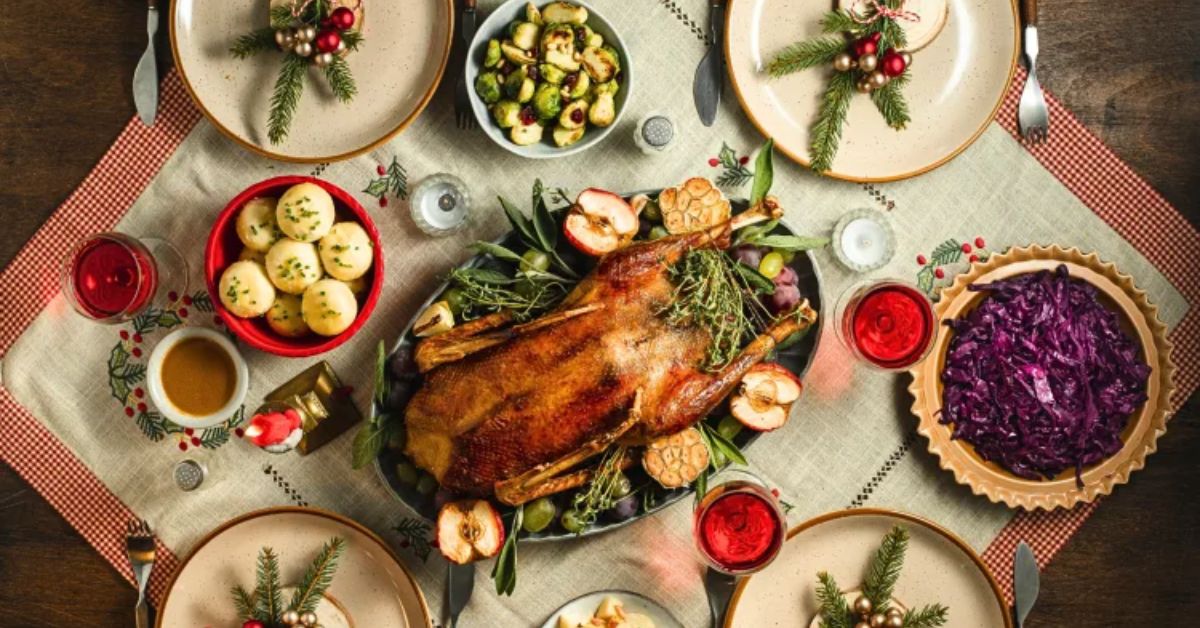
On December 25th, the moderation ends. The centerpiece of the German holiday table is almost always the Weihnachtsgans. The goose is typically stuffed with apples, chestnuts, onions, and prunes, then roasted until the skin is mahogany-crisp.
Essential Side Dishes for the Roast:
- Rotkohl: Red cabbage braised with apple, cloves, and a hint of vinegar.
- Klöße or Knödel: Large potato dumplings that act as sponges for the rich goose gravy.
- Preiselbeeren: Lingonberry jam to provide a tart balance to the fatty meat.
3. The Art of the German Christmas Cookie (Plätzchen)
German baking is legendary, and the variety of Christmas cookies is staggering. In many households, Plätzchen baking begins four weeks before Christmas during Advent.
| Cookie Name | Key Ingredients | Description |
| Zimtsterne | Almonds, egg whites, cinnamon | Star-shaped, gluten-free, and topped with white icing. |
| Vanillekipferl | Flour, butter, ground hazelnuts/almonds | Delicate crescent-shaped cookies dusted in vanilla sugar. |
| Lebkuchen | Honey, spices (cloves, ginger), nuts | The German version of gingerbread, often heart-shaped or on wafers (Oblaten). |
| Spekulatius | Shortcrust, cardamom, cloves, nutmeg | Spiced biscuits pressed into intricate wooden molds. |
The King of Cakes: Stollen
No German Christmas is complete without Stollen, specifically the Dresdner Christstollen. This dense, buttery bread is packed with rum-soaked raisins, candied orange peel, and sometimes a core of marzipan. Its shape is said to represent the swaddled Christ Child.
4. Regional Specialties to Seek Out
Germany’s culinary map is diverse, and Christmas brings out regional gems you won’t find everywhere.
- Aachener Printen: A specific type of Lebkuchen from Aachen, sweetened with sugar beet syrup and often quite hard.
- Bethmännchen (Frankfurt): Small marzipan pastries decorated with three halved almonds, representing the three sons of the Bethmann family.
- Schupfnudeln (Southern Germany): Often called “fingernails,” these are finger-shaped potato noodles usually pan-fried with sauerkraut and bacon at markets.
5. Festive Drinks Beyond Glühwein
While mulled wine takes the spotlight, other beverages keep the winter chill at bay:
- Feuerzangenbowle: A theatrical drink where a rum-soaked sugarloaf is set on fire, dripping caramelized sugar into a pot of mulled wine.
- Eierpunsch: A warm, creamy egg-based punch similar to eggnog but lighter and often spiked with white wine.
- Kinderpunsch: The non-alcoholic version for children, made with spiced fruit juices (apple, cherry, or grape).
H2: The Science and Craft of the German Christmas Bakery
This section focuses on the technical “why” behind the famous flavors, which is great for SEO keywords like “German baking techniques” and “authentic ingredients.”
H3: The Role of ‘Hirschhornsalz’ and ‘Pottasche’
Unlike modern cookies that use baking powder, traditional German Lebkuchen and Spekulatius often use Hirschhornsalz (ammonium carbonate) and Pottasche (potash).
- Why it matters: Explain that these leavening agents allow the dough to rise outward rather than upward, creating that signature crispness and long shelf life.
- The Flavor Profile: Mention how these ingredients react with honey to create a unique chemical browning (Maillard reaction) that gives German cookies their dark, rich color.
H3: Why German Flour Grades Matter (Type 405 vs. 550)
For readers trying to bake at home, explaining the difference in German flour types is invaluable.
- Type 405: The standard for fine pastries and Plätzchen.
- Type 550: Often used for the heavier, fruit-laden Stollen to support the weight of the nuts and dried fruits.
H3: The Maturation Process: The Secret of the Stollen
A “deep dive” must mention that a Dresdner Christstollen is not eaten fresh. It must be wrapped in linen and stored in a cool, dark place for 2 to 4 weeks. This allows the moisture from the rum-soaked raisins to permeate the dense dough, mellowing the spices.
H2: A Culinary Journey Through Germany’s Regional Christmas Micro-Traditions
This helps you rank for regional searches like “Bavarian Christmas food” or “Saxony holiday traditions.”
H3: The ‘Neunerlei’ of the Ore Mountains (Erzgebirge)
In Eastern Germany, families serve a meal called Neunerlei (Nine-fold meal). Each of the nine components has a symbolic meaning for the coming year:
- Sausage: For preservation of strength.
- Lentils: So that “big money” doesn’t run out.
- Hering/Carp: To ensure the family stays “slender” and healthy.
- Compote: To enjoy the “sweetness” of life.
(You can expand on all nine items to add significant word count).
H3: Lower Saxony’s ‘Grünkohl und Pinkel’
In parts of Northern Germany, Christmas time is also Grünkohl (kale) season. This isn’t a light salad; it’s a hearty stew cooked with Pinkel (a smoked groat sausage), bacon, and lard. It’s a rustic contrast to the elegant roast goose found in the South.
H3: The Medieval Tradition of the ‘Lebkuchenmidt’
Nuremberg is the world capital of gingerbread. Explain the “Guild of Lebkuchen-machers” and the strict laws governing the Elisenlebkuchen—the highest quality grade which must contain at least 25% nuts and less than 10% flour.
Conclusion: Bringing the German Christmas Home
The magic of German Christmas food lies in its sensory appeal. It’s about the warmth of a mug against cold fingers and the communal joy of sharing a heavy roast. Whether you’re wandering through the stalls of the Nürnberger Christkindlesmarkt or baking Zimtsterne in your own kitchen, these flavors provide a timeless connection to the heart of winter.
