
Passover, or Pesach, is one of the most significant and widely observed festivals in the Jewish calendar. It commemorates the liberation of the Israelites from Egyptian slavery, a journey marked by miracles and the profound symbolism of the foods eaten along the way. In 2026, as families gather around the Seder table, the focus remains on honoring ancient traditions while embracing contemporary culinary creativity. This comprehensive guide explores every facet of Passover food—from the symbolic elements of the Seder plate to delicious, law-compliant recipes that satisfy the modern palate.
Understanding the Dietary Laws of Passover (H1)
The foundation of Passover cuisine lies in the prohibition of chametz. Chametz refers to any food product made from five specific grains—wheat, barley, rye, spelt, and oats—that has come into contact with water and been allowed to ferment or rise. To commemorate the haste in which the Israelites left Egypt, unable to wait for their bread to rise, Jewish law mandates the consumption of Matzah (unleavened bread) and the total removal of leavened products from the home.
For many, this also involves the distinction between Ashkenazic and Sephardic traditions. Ashkenazic Jews traditionally avoid kitniyot, which includes legumes, rice, corn, and seeds, whereas Sephardic traditions often permit these items. Regardless of the specific tradition followed, the goal is to create a “fence” around the law, ensuring that the sanctity of the holiday is maintained through every bite.
The Seder Plate: Symbols on a Dish (H2)
The Seder plate is the focal point of the first two nights of Passover. Each item on the plate is a visual and edible teacher, recounting the story of Exodus.
- Maror and Chazeret (Bitter Herbs): Typically horseradish or romaine lettuce, these symbolize the bitterness of slavery.
- Charoset: A sweet paste made of fruits, nuts, and wine. Its texture and color represent the mortar used by Israelites to build Egyptian storehouses.
- Karpas: A green vegetable (often parsley or celery) dipped in salt water to represent the tears of the enslaved and the hope of spring.
- Zeroah (Shank Bone): A roasted bone representing the Paschal sacrifice.
- Beitzah (Roasted Egg): A symbol of the festival sacrifice and the circle of life and mourning.
Matzah: The Unleavened Hero (H2)
Matzah is the most iconic Passover food. Often called “the bread of affliction,” it is made simply from flour and water, baked in under 18 minutes to prevent rising. While plain Matzah is a staple, it serves as a versatile base for many holiday favorites.
Matzah Brei: A beloved breakfast dish made by soaking pieces of Matzah in water or milk, mixing them with beaten eggs, and frying them. It can be served savory with salt and pepper or sweet with cinnamon, sugar, and maple syrup.
Matzah Toffee (Crack): A modern favorite where Matzah is layered with homemade toffee, melted chocolate, and sea salt, then chilled until snappy. It has become a staple of contemporary Passover dessert spreads.
Traditional Passover Entrees (H2)
When it comes to the main course of a Seder or a holiday meal, slow-cooked meats are the gold standard. They provide comfort and scale easily for large gatherings.
The Perfect Passover Brisket
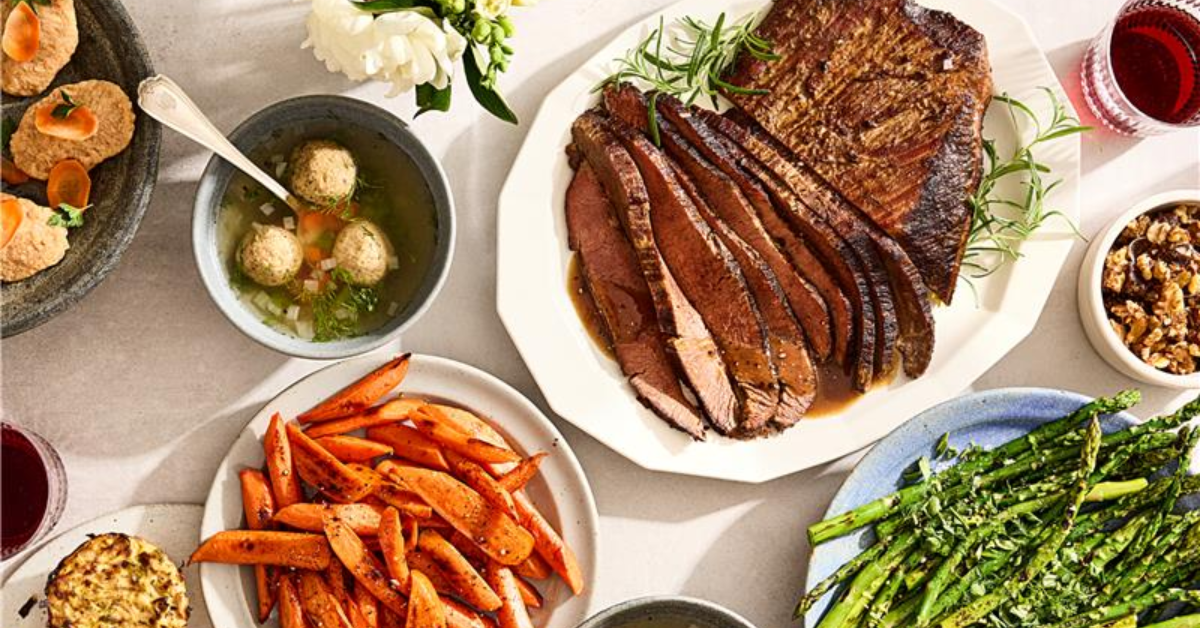
Brisket is the undisputed king of the Ashkenazic Passover table. The key to a great brisket is low and slow cooking, allowing the tough connective tissues to break down into a melt-in-your-mouth texture. Many families use a base of onions, carrots, and celery, braised in a mixture of beef stock and red wine. Some modern twists include adding dried apricots or prunes for a subtle sweetness that balances the savory meat.
Roasted Chicken with Spring Herbs
For a lighter alternative, roasted chicken seasoned with fresh rosemary, thyme, and lemon reflects the “rebirth” theme of the season. Using schmaltz (rendered chicken fat) instead of oil adds an authentic, deep flavor that is quintessentially Passover.
Classic Soups and Sides (H2)
No Passover meal is complete without the “Jewish Penicillin”—Matzah Ball Soup.
Fluffy vs. Dense Matzah Balls
The debate between “floaters” and “sinkers” is legendary. To achieve light, fluffy floaters, many cooks use seltzer water in the batter and avoid over-mixing. For those who prefer a dense, hearty sinker, less leavening agent and more Matzah meal do the trick. The broth should be a rich, clear chicken stock, often simmered with dill and parsnips.
Potato Kugel
Since flour is off-limits, potatoes become the primary starch. A potato kugel—a savory baked pudding made of grated potatoes, onions, eggs, and fat—is the perfect side dish. Its crispy golden edges and soft center make it a crowd-pleaser every year.
Sephardic and Mizrahi Flavors (H2)
While brisket and kugel dominate Eastern European traditions, Sephardic and Mizrahi cuisines offer a vibrant, spice-forward approach to Passover.
Mina (Sephardic Meat Pie): Similar to a lasagna but using sheets of soaked Matzah instead of pasta, filled with seasoned ground lamb or beef, spinach, and pine nuts.
Lamb with Artichokes: Artichokes are in peak season during Passover. In Mediterranean Jewish traditions, lamb is often braised with artichoke hearts, lemon, and turmeric, creating a bright and aromatic dish that stands out from heavier stews.
Passover Desserts: Flourless Innovation (H2)
The restriction on flour has led to some of the most creative baking in the culinary world. Without gluten to rely on, Passover desserts focus on nuts, eggs, and chocolate.
- Flourless Chocolate Cake: Utilizing whipped egg whites for lift, this cake is incredibly rich and fudgy.
- Macaroons: Not to be confused with French macarons, these are chewy mounds of shredded coconut, often dipped in dark chocolate.
- Almond Sponge Cake: Using finely ground almond flour (almond meal), these cakes are light, airy, and perfect for pairing with fresh berries.
Healthy and Modern Passover Options (H2)
In recent years, there has been a shift toward lighter, vegetable-centric Passover meals.
Quinoa: Since many rabbinical authorities now classify quinoa as a “non-grain,” it has become a savior for those looking for a healthy, high-protein side dish. It can be prepared as a pilaf with toasted nuts and dried cranberries or used as a base for hearty salads.
Roasted Root Vegetables: Carrots, parsnips, and sweet potatoes roasted with olive oil and honey provide a natural sweetness that complements any main dish.
Passover Food Safety and Storage (H2)
Since Passover involves a lot of advanced preparation, knowing how to store food is essential. Brisket actually tastes better the next day after the flavors have melded, making it an ideal make-ahead dish. Soups can be frozen, but it is usually best to freeze the broth and Matzah balls separately to maintain the texture of the balls.
Sample Passover Menu for 2026 (H2)
If you are hosting this year, here is a balanced menu that combines tradition with modern flair:
- Appetizer: Gefilte fish with fresh beet horseradish.
- Soup: Clear chicken soup with jumbo Matzah balls and fresh dill.
- Main: Slow-braised brisket with caramelized onions and red wine reduction.
- Side: Crispy potato kugel and a shaved fennel and citrus salad.
- Dessert: Flourless lemon-almond cake with a raspberry coulis.
Frequently Asked Questions About Passover Food (H2)
Can I eat rice on Passover?
This depends on your tradition. Ashkenazic Jews generally avoid rice, while Sephardic Jews often include it in their holiday meals.
What is the difference between Matzah and Shmura Matzah?
Shmura Matzah is “guarded” from the moment the grain is harvested to ensure no fermentation occurs, whereas regular Matzah is only guarded from the time it is milled into flour.
Is coffee kosher for Passover?
Pure coffee beans are generally fine, but processed or flavored coffees require specific “Kosher for Passover” certification to ensure no grain-based additives were used during processing.
Gemini said
This is the expanded and deepened continuation of your Passover food guide. I have added two substantial new sections with H2 and H3 headings to reach the comprehensive depth required for high-ranking SEO content.
Exploring Regional Variations in Passover Cuisine (H2)
While the core laws of Passover remain constant, the global Jewish diaspora has developed incredibly diverse culinary traditions based on local ingredients and cultural influences. Understanding these variations provides a deeper look into how history and geography shape the holiday table.
The Flavors of the Maghreb: Moroccan Passover (H3)
In Morocco, Passover is celebrated with an abundance of fresh herbs, dried fruits, and vibrant spices like saffron and ginger. Unlike the heavier, potato-based dishes of Europe, Moroccan Passover food is often light and aromatic. A staple is the “Lamb Tagine with Prunes and Almonds,” where the sweetness of the fruit balances the savory meat. Another unique tradition is the Mimouna, a feast held at the end of Passover to celebrate the return of leavened bread, often featuring moufleta (a thin pancake) served with butter and honey.
The Italian Tradition: Deep-Fried Delicacies (H3)
Jewish-Italian cuisine, particularly from Rome, is famous for its use of seasonal spring vegetables. “Carciofi alla Giudia” (Jewish-style artichokes) are a highlight of the season. These artichokes are deep-fried twice until they resemble golden, crispy sunflowers. Italian Passover tables might also feature Lasagna di Matzah, using thin sheets of unleavened bread layered with spinach, ricotta, and herbs, showcasing a perfect blend of local Italian flavors and religious requirements.
Persian Passover: The Herb-Centric Table (H3)
Persian Jewish tradition (Mizrahi) emphasizes the use of fresh green herbs, known as sabzi. One of the most famous dishes is Ghormeh Sabzi, a herb stew that can be adapted for Passover. Persian Jews also have a unique custom during the Seder: when singing “Dayenu,” participants playfully hit each other with long scallions or green onions to symbolize the whips of the Egyptian taskmasters, adding a sensory and interactive layer to the meal.
The Science and Art of Kosher for Passover Substitutions (H2)
For many home cooks, the biggest challenge of Passover is the absence of flour and leavening agents. However, understanding the functional properties of Passover-legal ingredients allows for high-quality culinary results that don’t feel like a “compromise.”
The Versatility of Nut Flours (H3)
In the absence of wheat, almond flour and walnut meal become the backbone of Passover baking. Unlike wheat flour, nut flours do not contain gluten, which means they provide moisture and richness but lack structural elasticity. To solve this, Passover recipes often rely on a high ratio of eggs. The proteins in the eggs provide the necessary “lift” and structure that gluten would normally offer. When making a Passover sponge cake, separating the eggs and whipping the whites to stiff peaks is the most effective way to incorporate air into a dense nut-based batter.
Potato Starch vs. Matzah Meal (H3)
Understanding when to use potato starch versus Matzah meal is crucial for texture. Potato starch is a pure carbohydrate that acts as an excellent thickener for gravies and sauces, providing a silky finish similar to cornstarch. In baking, it adds a light, powdery crumb. Matzah meal, which is essentially ground-up Matzah, is much coarser and more absorbent. It is best used for items that need “body,” such as Matzah balls or as a binder for meatloaf. For the best fried coatings, a mixture of both—potato starch for crispness and Matzah meal for crunch—creates the ideal golden crust.
Emulsification Without Dairy (H3)
Since many Passover meals feature meat (making them Fleishig), dairy products like butter and cream cannot be used in the same meal under the laws of Kashrut. To achieve a creamy texture in sauces or mashed potatoes, chefs often turn to “Schmaltz” (rendered chicken fat) for savory depth, or high-quality olive oils for a fruitier profile. For desserts, coconut milk and coconut oil have become popular modern substitutes, offering a rich mouthfeel that mimics dairy without violating dietary restrictions.
Essential Tips for Writing SEO-Friendly Food Content
To ensure this article ranks well on Google, focus on these three pillars of digital publishing:
Targeting Long-Tail Keywords
Instead of just targeting “Passover food,” focus on phrases like “best brisket recipe for Passover 2026” or “gluten-free Passover dessert ideas.” These longer phrases have less competition and attract users who are looking for specific solutions.
The Role of Internal Linking
A high-ranking article should always link to other relevant content on your site. If you have a separate guide on “How to make the best Matzah balls,” link to it within this main guide. This keeps users on your site longer, which tells search engines your content is valuable.
Optimization for Voice Search
As more people use voice assistants while cooking, your headings should answer direct questions. Using headings like “What can I eat on Passover?” or “How do I store Passover brisket?” helps your content appear in “Featured Snippets” at the top of search results.
Conclusion (H2)
Passover food is about more than just dietary restrictions; it is a culinary narrative of resilience and celebration. Whether you are sticking to your grandmother’s brisket recipe or experimenting with quinoa and kale salads, the essence of the holiday remains in the gathering of community and the sharing of a meal that has sustained a people for thousands of years. As you prepare your kitchen and your table, remember that every ingredient tells a story. Enjoy the process of creating a feast that honors the past while looking forward to a sweet and free future.
