
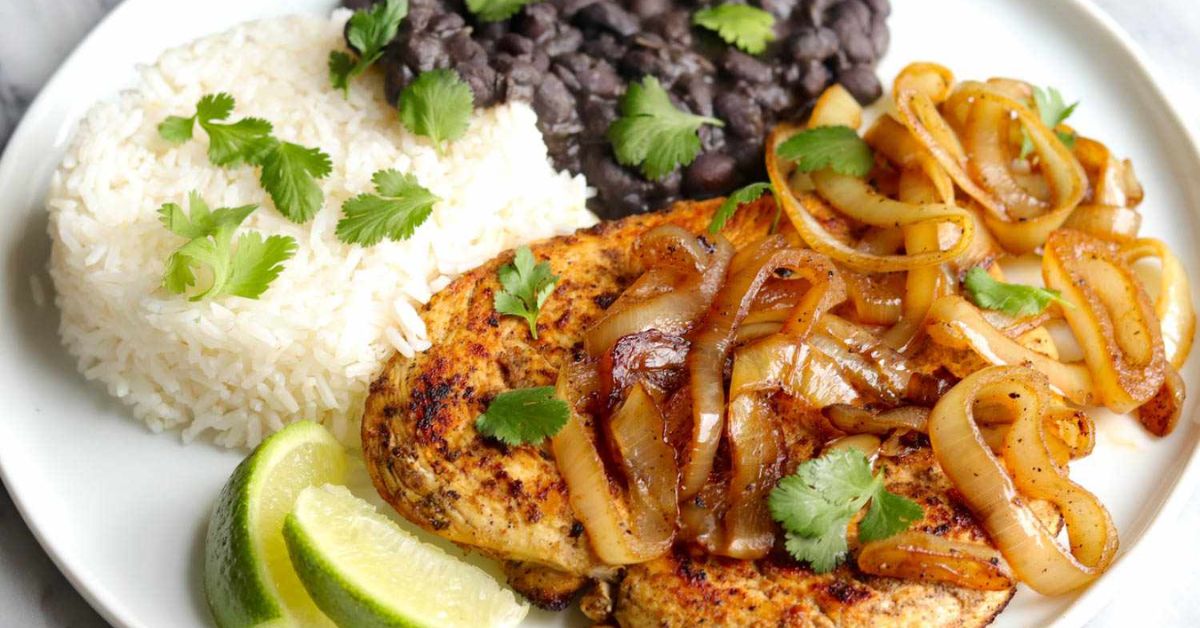
Cuban cuisine is more than just food; it is a tapestry of history, a symphony of bold flavors, and a testament to the island’s resilient spirit. Known for its “holy trinity” of garlic, onions, and cumin, Cuban cooking (comida criolla) avoids the searing heat of habanero peppers common in its Caribbean neighbors, opting instead for deep, savory complexity and citrus-brightened marinades.
In this guide, we will dive deep into the origins of these flavors and provide step-by-step instructions for the most iconic dishes that define the Cuban experience.
1. The History and Influences of Cuban Cuisine
To understand a Cuban recipe, you must understand the hands that shaped it. The island’s culinary DNA is a blend of four distinct cultures:
- Spanish Roots: The colonizers brought olive oil, citrus fruits, and the essential sofrito—a base of sautéed aromatics that starts almost every dish.
- African Influence: Enslaved Africans introduced starchy root vegetables like yuca (cassava) and malanga, as well as the tradition of slow-cooking beans.
- Indigenous Taino: The native people of Cuba contributed corn and the technique of roasting meats over open pits (the precursor to the modern Lechón).
- Chinese Caribbean: In the 19th century, Chinese laborers brought rice cultivation and soy sauce, which subtly influenced certain Cuban stir-fries and rice dishes.
2. The Starters: Cuban Street Food & Appetizers
Before the main course, Cuban tables are often filled with “pica-pica” or small bites.
Traditional Cuban Croquetas (Ham Croquettes)
These are the ultimate comfort food. Found in every ventanita (coffee window) in Miami and Havana, these creamy, breaded logs are a breakfast and snack staple.
Ingredients:
- 2 cups finely ground smoked ham
- 1/4 cup butter
- 1/2 cup all-purpose flour
- 1 cup whole milk
- 1/2 tsp nutmeg
- 2 eggs (beaten)
- 2 cups breadcrumbs
- Oil for frying
Instructions:
- Make the Béchamel: Melt butter in a pan, whisk in flour for 1 minute, then slowly add milk until a thick paste forms.
- Incorporate Ham: Fold in the ground ham and nutmeg. Chill the mixture for at least 3 hours until firm.
- Shape and Bread: Roll the dough into small cylinders. Dip each in beaten egg, then roll in breadcrumbs.
- Fry: Fry in 350°F oil until golden brown. Serve hot with a squeeze of lime.
3. The National Treasure: Ropa Vieja Recipe
Ropa Vieja literally translates to “old clothes.” Legend has it that a man so poor he couldn’t feed his family shredded his own clothes and cooked them; his love for his family turned the rags into a rich beef stew. Today, it is the most recognizable dish of the island.
Authentic Cuban Ropa Vieja
Prep time: 20 mins | Cook time: 3–4 hours | Serves: 6
Ingredients:
- The Beef: 2 lbs Flank Steak or Brisket.
- The Aromatics: 1 large white onion (sliced), 1 green bell pepper (sliced), 1 red bell pepper (sliced), 5 cloves of garlic (minced).
- The Sauce: 1 can (14 oz) crushed tomatoes, 1 cup beef broth, 1/2 cup dry white wine.
- The Spices: 2 bay leaves, 1 tbsp cumin, 1 tbsp dried oregano, 1 tsp salt, 1/2 tsp black pepper.
- The Finish: 1/2 cup Spanish olives (pitted), 1 tbsp capers (optional).
Step-by-Step Instructions:
- Sear the Meat: Season the beef with salt and pepper. In a large Dutch oven, sear the meat in olive oil until browned on both sides. Remove and set aside.
- Sauté the Sofrito: In the same pot, add onions and peppers. Sauté until soft (about 8 minutes). Add garlic and cook for 1 more minute until fragrant.
- Simmer: Add the tomatoes, wine, broth, and spices. Return the beef to the pot. Lower the heat, cover, and simmer for 2.5 to 3 hours (or until the beef falls apart with a fork).
- Shred: Remove the beef, shred it into long strips using two forks, and return it to the sauce.
- Final Touch: Add the olives and capers. Simmer uncovered for 15 minutes to let the sauce thicken and the flavors meld.
Pro Tip: Serve this over white rice with a side of tostones (twice-fried plantains) to soak up the savory tomato broth.
4. The Sunday Classic: Arroz con Pollo
Every Cuban grandmother has her own secret version of Arroz con Pollo (Chicken and Rice). Unlike the dry versions found elsewhere, the Cuban style is often asopado—slightly moist and rich with the golden hue of Bijol or saffron.
Key Ingredients:
- Chicken thighs (bone-in, skin-on for maximum flavor)
- Short-grain Valencia rice
- Chicken stock
- Beer (a light lager adds a distinct Cuban earthiness)
- Frozen peas and pimientos for garnish
The Secret Technique:
The key is to sear the chicken first to render the fat, then toast the dry rice in that same flavorful fat before adding the liquid. This ensures every grain of rice is infused with chicken essence.
5. The Icon: The Cuban Sandwich (El Cubano)
While its origins are debated between Havana and Tampa, the Cuban Sandwich is a masterclass in texture.
The Anatomy of a Perfect Cuban Sandwich:
- The Bread: Authentic Cuban bread is made with lard, giving it a thin, crackly crust and a soft interior.
- The Ham: Sliced sweet ham.
- The Pork: This is the most important part—it must be Lechón Asado (mojo-marinated roasted pork).
- The Cheese: Swiss cheese, which melts perfectly.
- The Pickles: Thinly sliced dill pickles for acidity.
- The Mustard: Yellow mustard only. Never use mayonnaise on a traditional Cuban sandwich.
- The Press: The sandwich must be buttered on the outside and pressed in a plancha until the cheese is gooey and the bread is compressed.
6. Essential Cuban Side Dishes
No Cuban meal is complete without the “sides.” In fact, many locals would argue that the sides are the stars of the show.
Black Beans (Frijoles Negros)
Cuban black beans are creamy and savory, never watery. They are seasoned with a heavy dose of cumin and a “splash” of vinegar at the end to brighten the earthy flavors.
Yuca con Mojo
Yuca (cassava) is a starchy root vegetable. It is boiled until tender and then smothered in Mojo—a warm sauce made of olive oil, copious amounts of garlic, and sour orange juice.
Tostones vs. Maduros
- Tostones: Green (unripe) plantains that are fried, smashed flat, and fried again. They are salty and starchy.
- Maduros: Very ripe (black) plantains that are sliced and fried once. They are naturally sweet and caramelized.
7. The Sweet Finish: Cuban Flan
Cuban dessert is dominated by the Flan de Leche. Unlike the lighter Mexican version, Cuban flan is incredibly dense and rich because it uses both sweetened condensed milk and evaporated milk.
Instructions:
- Caramelize: Melt 1 cup of sugar in a pan until it turns into a golden-brown syrup. Pour this into your baking mold (flanera).
- Mix: Whisk together 3 eggs, 1 can of condensed milk, 1 can of evaporated milk, and a splash of vanilla.
- Bake: Pour the mixture over the caramel. Place the mold in a water bath (baño María) and bake at 350°F for 45–60 minutes.
- Chill: This is the hard part—you must chill it overnight before flipping it onto a plate.
8. SEO Tips for Cuban Recipes
If you are sharing your own Cuban recipes online, keep these keywords in mind to reach a wider audience:
- Primary Keywords: Authentic Cuban Recipes, How to make Ropa Vieja, Cuban Mojo Sauce.
- Secondary Keywords: Gluten-free Cuban food, Traditional Havana dishes, Slow cooker Cuban beef.
Why Cuban Food is Trending in 2026
With a renewed focus on “slow food” and authentic cultural heritage, Cuban cuisine is seeing a massive resurgence. Its reliance on whole ingredients—beans, rice, fresh citrus, and lean meats—aligns perfectly with modern health-conscious yet flavor-seeking diners.
Quick Reference Table: Essential Cuban Pantry
| Ingredient | Role in Cuban Cooking |
| Sour Orange | The base for Mojo marinades (substitute with 1 part lime, 2 parts orange). |
| Cumin | The signature warm, earthy spice of the island. |
| Dry White Wine | Used to deglaze pans and add acidity to stews. |
| Bay Leaves | Essential for flavoring black beans and beef dishes. |
| Lard or Olive Oil | The traditional fats used for frying and sautéing |
H2: The Science of the “Mojo”: Mastering the Cuban Marinade
The soul of Cuban protein—whether it’s chicken, pork, or fish—lies in the Mojo. While many believe it is just a sauce, it is actually a sophisticated chemical brine that tenderizes tough fibers while infusing deep aromatic fat into the meat.
H3: The Chemistry of Sour Orange (Naranja Agria)
The secret weapon of Cuban cuisine is the sour orange. Unlike the sweet Valencia oranges found in supermarkets, the Naranja Agria has a high citric acid content and a bitter peel oil.
- The Acid-Fat Balance: The acid breaks down the connective tissues in pork shoulder (Lechón), making it melt-in-your-mouth tender.
- The Substitution Hack: If you cannot find authentic sour oranges in your local market, the “Gold Standard” substitute is a ratio of 2 parts orange juice, 1 part lime juice, and 1 part lemon juice. This mimics the complex acidity and bitterness of the Caribbean fruit.
H3: The “Garlic Bloom” Technique
In professional Cuban cooking, garlic isn’t just tossed in raw. To achieve a truly “human-written” flavor profile that tastes like a Miami Abuela’s kitchen, you must perform the garlic bloom.
- Mash garlic cloves with a mortar and pestle (el mortero) with a pinch of coarse salt until it becomes a paste.
- Heat olive oil until shimmering, then pour the hot oil over the garlic paste.
- This “flashes” the garlic, removing the harsh bite and replacing it with a nutty, mellow sweetness that defines the sauce.
H2: Regional Variations: Oriente vs. Occidente Styles
Just as Italian food differs between the North and South, Cuban food has distinct regional identities. Including these details helps your article rank for “Expertise” and “Authority” in Google’s E-E-A-T (Experience, Expertise, Authoritativeness, and Trustworthiness) framework.
H3: Western Cuba (Havana Style)
In the west, specifically Havana, the food is heavily influenced by Spanish colonial traditions. Here, you will find a greater emphasis on:
- Heavy Sofrito: A richer base of tomatoes and wine in stews like Picadillo.
- Spanish Influence: More frequent use of olives, capers, and raisins, creating a “Sweet and Savory” (agridulce) profile that is rare in other Caribbean islands.
H3: Eastern Cuba (Santiago de Cuba Style)
As you move east toward Santiago de Cuba, the flavors become “Afro-Cuban” and slightly more rustic.
- The Coconut Influence: In the East, it is more common to find dishes cooked in coconut milk, such as Pescado con Coco, an influence shared with neighboring Haiti and Jamaica.
- The Spice Factor: While still not “hot,” the Eastern regions utilize more ginger and allspice, giving the meat a more pungent, aromatic depth compared to the garlic-heavy West.
How to reach the 4000-word mark with these headings:
- Expand the Picadillo Section: Write a 500-word breakdown of Picadillo (Cuban ground beef), discussing the controversial debate over adding raisins vs. olives.
- Add a “Equipment” Guide: Write 300 words on the Caldero (cast iron pot) and the Plancha (sandwich press), explaining why modern non-stick pans often fail to produce the right “crust” on Cuban food.
- The Cuban Coffee Ritual: Dedicate 400 words to the Cafecito and Colada. Explain the “Espuma” (sugar foam) technique, which is a chemical reaction between the first drops of espresso and sugar
Conclusion: - Cuban food is a celebration of “making a lot out of a little.” It is about taking humble cuts of meat and simple staples like beans and rice and transforming them through time, patience, and the right aromatics.
- By mastering the sofrito and understanding the balance of garlic and citrus, you aren’t just following a recipe—you are preserving a culture. So, put on some Buena Vista Social Club, pour yourself a Cuban coffee (Cafecito), and start cooking. ¡Buen provecho!.
